Build withyour localexpertise.
We add the services, the platform and the business.
No licence fee, no territory fee and no minimum volume.
For as long as each community you serve stays on the platform.
You deliver the journey services as your own proposition.
Local energy becomes shared value.
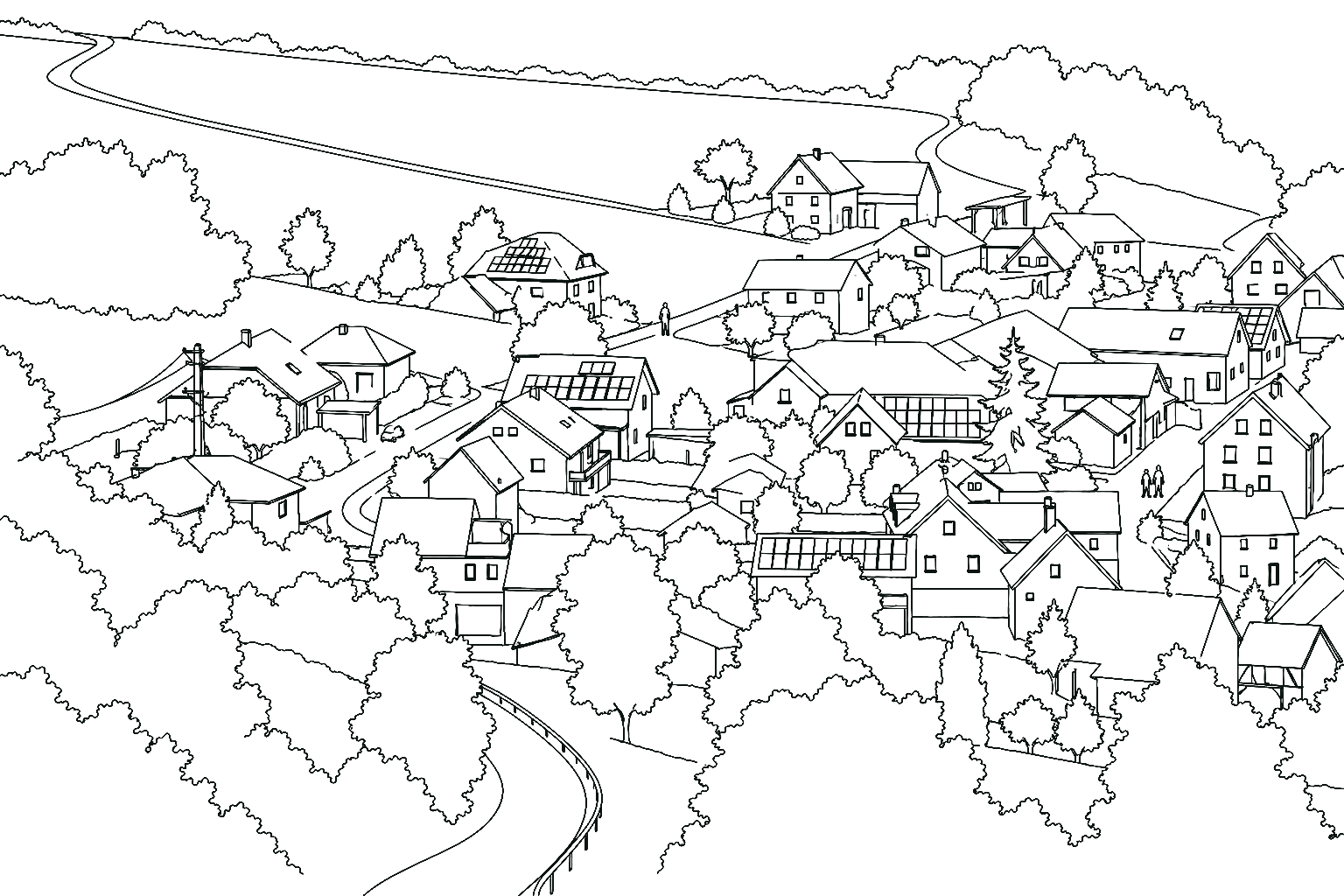
Hypha Energy makes local renewable energy easier to own, govern, share and benefit from together.
Energy is one of the few high recurring costs a community can take charge of collectively: a street, a village, a housing association, a group of businesses on one industrial estate. A community that runs its own energy can also run other things.
We will measure the value a community creates with its local energy in five ways.
- Local generation
- Local self-supply
- Community-owned assets
- Local investment mobilised
- Energy cost savings
The execution gap.
Energy communities make sense on paper: lower costs, local ownership, cleaner power. Three things are already in place.
European law allows it.
The Renewable Energy Directive gave the energy community a legal form in 2018 and strengthened it in 2023, and every member state has had to make room for it.
The technology works and has become affordable.
Panels, batteries, meters and the software to run them are no longer the hard part.
The people are willing.
Communities are already organised in their hundreds, and more form every year. Portugal's regulator counts over a thousand collective self-consumption and energy community projects in operation.
Many never reach a working system. The gap is execution capacity: turning local willingness into something financed, governed and running.
Regulation, governance, hardware, funding and the fair division of value each need expertise a community rarely has. The administrative workload alone is more than volunteers can carry, and most communities assemble their answer from vendors nobody built to work together.
Hypha Energy closes this gap. It is the operating layer for community-owned energy: it records who owns what, hosts the community's decisions and shares out the value, in one platform.
Why the market is opening.
Based on SolarPower Europe's projections for new solar capacity, we estimate around 590,000 potential energy hubs across Europe by 2030, representing about €292bn of investment. We plan to serve that market through regional partners.
590,000
Potential energy hubs in Europe by 2030Modelled by Hypha Energy from SolarPower Europe's solar projections
€292bn
Estimated investmentModelled by Hypha Energy from SolarPower Europe's solar projections
Our growth ambition is 10,000 energy communities and hubs by 2030. The number is the means. The value those communities and hubs activate is the point.
Why now
| Year | What changed |
|---|---|
| 2018 | Renewable energy communities get a legal form, with the right to generate, store and sell energy together. |
| 2019 | Citizen energy communities are added, and independent aggregation is recognised. |
| 2023 | Binding renewable targets rise to at least 42.5% by 2030. |
| 2024 | A right to energy sharing. Households, small businesses and public bodies may share locally generated energy between themselves, without becoming an energy supplier. |
Member states had until 17 July 2026 to put that last right into national law. Each market completes it at its own speed, which is why some are ready now and others are not. Sharing happens within a bidding zone or a smaller local area that each member state sets, and where larger businesses take part the installation is at most 6 MW. That is the segment Hypha Energy serves. Source: Directive (EU) 2024/1711, Article 15a.
Energy communities need a local organiser.
The rules, the grid operator, the funding and the people who decide are all local.
Hypha Energy builds and runs the platform and works through regional partners. An Energy Sharing Organiser delivers the journey services under its own name and keeps the relationship once the community is live.
European law recognises the role. Since 2024, people who share energy may appoint an energy sharing organiser to run the sharing for them.
What an Energy Sharing Organiser does
Who this is for
- Organisations already working with communities, cooperatives or municipalities in their region
- With knowledge of the national rules, the grid operator and the funding routes
- With people who can sell and deliver
- Able to carry a young business through its first year
Five functions in one platform.
Hypha Energy is the operating layer for community-owned renewable energy. It handles in one platform what a community would otherwise buy from four suppliers.
Engage
Members join, and a community moves from first interest to a business case it believes.
Shared Ownership
A live register of who owns which asset: the solar, the storage, the chargers.
Shared Decisions
Membership, proposals, voting and the treasury, with every decision recorded where any member can check it.
Optimise
The platform balances production, use, storage and demand against the rules the community set.
Shared Value
Energy measured and valued every fifteen minutes, then settled between members.
Two more sit underneath. Market Access gives a community a compliant route to market. Ecosystem Integration connects the platform to business software, maintenance and the Energy Sharing Organiser.
The community configures all of this itself and keeps control of its own data.
Five stages, many buyers.
Every energy community moves through five stages on its way to a system that runs and pays off. What differs is who is asking: a municipality raising awareness, an initiators' group with no plan yet, a core team that needs to run the platform. Each stage closes one question before the next opens.
- Explore
Is this real for us, and what would we gain?
- Organise
Who is in, and how do we organise?
- Set up
Can we run the platform ourselves?
- Design
What do we build, and how is it financed?
- Live
The community becomes a customer and runs its own system.

Your services.
A community doesn't take every service in order. It orders what the moment calls for, the way an Energy Sharing Organiser reaches into a toolbox for the right tool. Each card names the stage it fits, who typically asks for it and the moment that calls for it. Most services deliver something the community keeps, whether or not it goes on to use the Hypha Energy platform.
Quick Scan
Who orders it: an initiator, a municipal officer, a cooperative board, a business park manager
The moment: someone has an idea and a location, and wants to know if it's real
FreeEnergy & Savings Simulator
Who orders it: the initiators' group, after the Quick Scan
The moment: the group wants to know what it would gain before it organises
€1,000 per sessionPurpose game
Who orders it: the initiators' group
The moment: the group wants to agree its purpose before it configures anything
€1,000 per sessionEnergy Community Canvas
Who orders it: the core team, once the group has a purpose
The moment: the team needs a plan it can take to its members
From €2,000Social hackathon
Who orders it: a municipality, or a large initiators' group
The moment: a municipality wants residents to know they can organise. The hackathon covers the Simulator, the Purpose game and the Canvas in two days, for a large group
On quoteDeepening modules
Who orders it: the core team, theme by theme
The moment: the team needs a worked answer on one theme, feeding the Masterplan
€500 per moduleSet-up & Onboarding Accelerator
Who orders it: the board and local experts
The moment: the community needs to run the platform and onboard its members before it buys the hardware
€5,000 per communityDetailed Smart Hardware Masterplan
Who orders it: the core team, with an installation partner
The moment: the community needs a tender-ready spec a bank can lend against
3% of building costsAll prices excluding VAT.
Once a community signs up for the ecosystem fee it becomes a customer. From that moment it owns the assets, sees what it generated, used and shared in fifteen-minute intervals, and decides how members share the benefit. The members change that rule by vote.
A business worth running.
20%
Of the yearly ecosystem fee, for as long as the community staysAn Energy Sharing Organiser earns a share of every service it sells, delivered together with Hypha Energy, and 20% of the yearly fee for as long as the community stays.
What Hypha Energy brings.
- No cost to beginNo licence fee, no territory fee, no minimum volume. Hypha Energy earns its share from the ecosystem fee, only once the community is live.
- Your propositionYou deliver the journey services under your own name.
- TrainingHypha Energy takes you through each service and the platform, and works alongside you on your first community.
- Platform and technical supportHypha Energy runs the platform, maintains the contracts and takes the escalations that need engineering.
- Shared learningWhat one market works out is available to the others.
Questions partners ask.
An Energy Sharing Organiser helps energy communities form and run in its own city, province or region. It signs up communities, guides them along the journey to a live energy community and delivers the services they choose, from the Quick Scan to the Smart Hardware Masterplan. EU law has recognised the role since the 2024 electricity market reform: households and businesses that share energy may appoint a third party to run energy sharing for them.
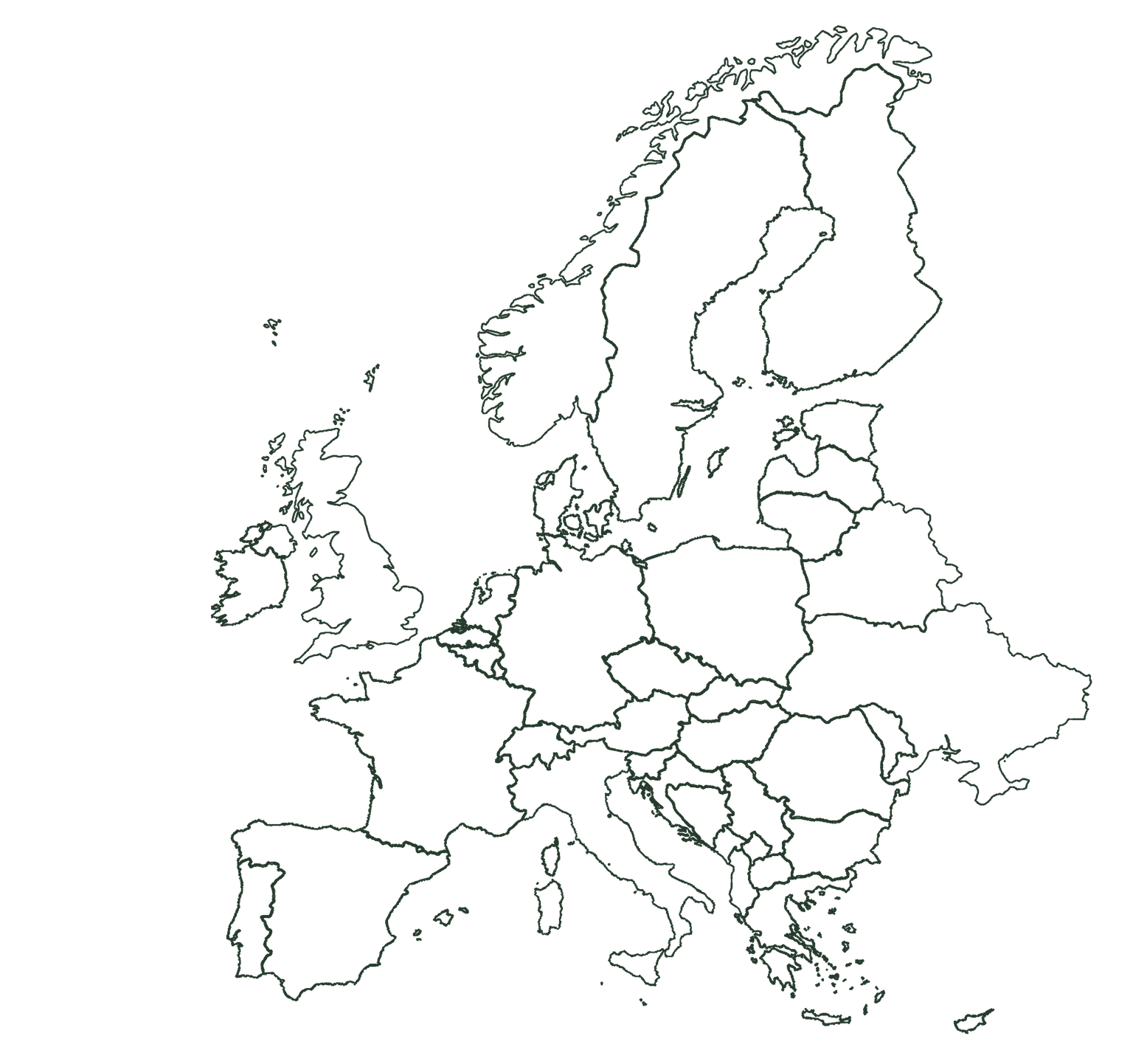
Looking for partners across Europe.
We work with partners in Portugal, Spain and Norway, and are setting up partners in the Netherlands and Poland.
We are looking for Energy Sharing Organisers in every region of Europe, also where a partner is already active.
- Portugal and SpainOne partner covers both countries.Partner active
- NorwayPartner active
- The NetherlandsPartner being set up
- PolandPartner being set up
- The rest of EuropeNo partner yet. Your region could be the first.Open for partners
Is this the work you already believe in?
Talk to us about the opportunity where you are, and go through the partnership pack together.
The pack covers the full economics, what each service delivers, what Hypha Energy looks for in a partner and what a first year involves.